piscator1'483 Beiträge · seit 200928. Feb. 2016 · #21
Ich bin kein Experte, wir haben so eine gesehen (zu schnell zum Fotografieren) und haben im Nachhinein gemeint, es sei eine Psammophis subtaeniatus (Western stripe-bellied sand snake) gewesen. Vielleicht meldet sich ja Maddy noch.
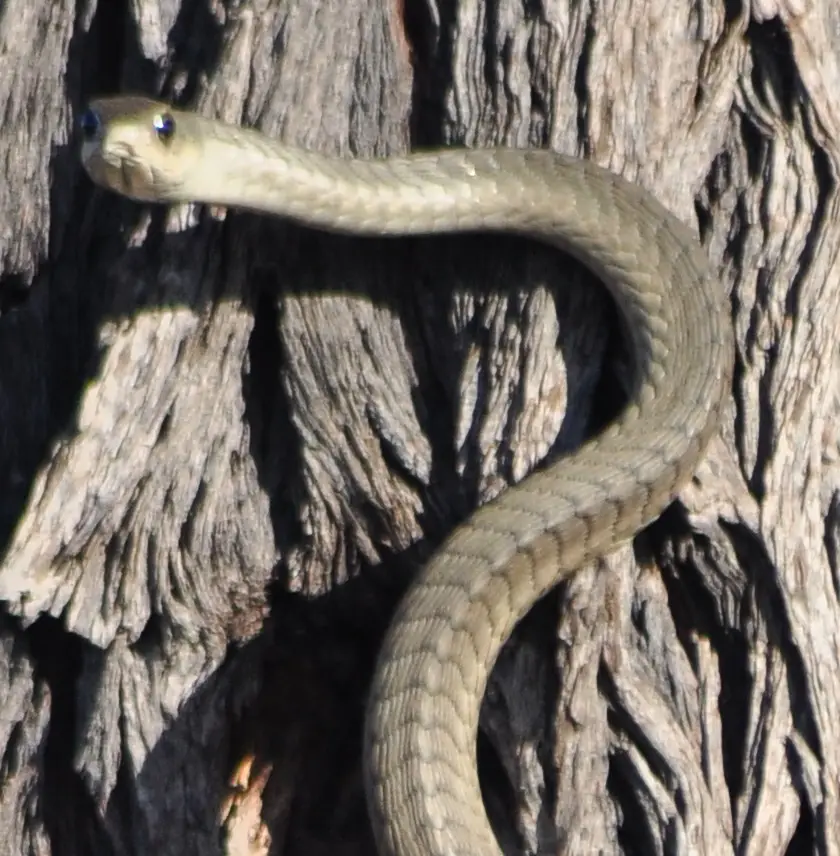
@ Axel: Laut der Experten von der facebook Gruppe "Snakes of Namibia" handelt es sich um eine female Boomslang.
@ Silvio: Das ist eine Leopard Sand Snake
Hier einfach mal einige Infos von der Seite:
Snake Catchers Contact Details / Basic Snake Safety Tps And First Aid.
Windhoek: Francois Theart 0812900343 (All hours) Mike Böttger 0811297304 (All hours when in Windhoek) Jaques Arangies 0812809839 (After hours and weekends) Taimi Stamm 0811441804 (All hours when in Windhoek)
Otjiwarongo: Brendon Barnard 0812194873 ( Some weekends in Otji.) Bennie Hollander 0816284527 (All hours) Frikkie Du Toit 0818595051 (Available lunch hour and any time after five) Ethne Engelking 0852977334(Daylight hours)
Grootfontein: De Wet Horn 0810343057
Tsumeb: De Wet Horn 0810343057 Stephan Saschse 08127677552
Coastal – Swakopmund,Walvis Bay and Henties Bay: Simon or William McGowan 0812339242/0818904841 (All hours)
Rehoboth: Mario Gutteres 081688846/08588846/0817455090 (All hours)
In the case of a snake bite, please email snakebite to snakebitedoc@gmail.com, Dr Buys will respond immediately.
When a snake is spotted, please keep your eyes on the snake and make sure you have these numbers close by to phone for assistance. And please bear in mind that most of these are working people, so please do not phone everyone on the list when someone is already on the way. When someone gets there they will use their own discretion to decide whether or not they need backup. Please also note, trying to kill the snake could result in a bite as it naturally will try to defend itself.
Basic Snake Safety And First Aid.
There are NO effective snake repellents
1. Avoid storing building materials such as bricks, pipes and sheets of iron near the house. 2. Avoid compost heaps, rockeries, aviaries, chicken coops, fish ponds and loose rocks , as they may provide a source of food or suitable hiding spots 3. Avoid creeping plants, thick hedges and shrubs especially against house walls and open windows 4. Store animal feed in rat proof containers. Note all buildings should be kept snake free. Where there's rats there's going to be snakes. 5. Close off all of the cracks/holes where snakes might fit through. 6. Keep doors and windows closed during the day as many snakes seek shelter. ( reference snakes and snakebite in southern Africa)
What to do in case you encounter a snake:
1. Do Not try to kill the snake as this may result in a bite! 2. Keep a calm head. Stand absolutely still-most snakes will flee immediately. If the snake stands it's ground, however, retreat slowly. 3. Contact your nearest snake catcher to deal with the situation.
Avoiding snakebite:
1. Wear proper clothing when walking in the veld preferably boots and long trousers. 2. Wear sunglasses as this provides protection against spitting cobras. 3. Watch your step. Rather step on to logs and rocks and not over them 4. Do not collect fire wood at dusk or at night that's looking for trouble. 5. If you're a mountaineer be careful where you place your hands, as many snakes like to bask on the ledges. 6. Do not pick up any snake no matter how harmless it may seem. 7. Do not pick up what appears to be a dead snake, as some venomous species shame death. 8. Use flash light when walking at nigh and keep your eyes open. 9. Avoid walking in long grass.
Basic first aid:
1. Keep victims calm and reassured. 2. Remove jewellery and tight clothing. 3. Victim must lie down and kept as still as possible. 4. Elevate limb and transport to Hospital. 5. Pressure bandages should ONLY be applied to Neurotoxic snake bites!! ( black mamba, Cape cobra, anchietas cobra) 6. If you cannot ID the snake apply a pressure bandage. Note this should NOT be used on adder and spitting cobra bites. 7. If victim stops breathing resort to mouth to mouth resuscitation.
DO NOT:
1.Cut or suck. 2. Apply tourniquet. 3. Apply ice or give victim alcohol. 4. Inject anti venom as a first aid measure.
In case of venom in the eye:
1.Rinse it out with running water for 10-15min. 2.avoid rubbing eyes. 3. Seek medical attention. 4. Do not attempt to kill the snake rather take a picture from a safe distance, however if the snake as been killed take it to the hospital.
Planungshilfe und Buchungen von Mietwagen, Unterkünften und Aktivitäten ohne zusätzliche Kosten.
www.magic-vibes.de
Biologe1'162 Beiträge · seit 201228. Feb. 2016 · #24
Hallo Silvio,
Was sich auch immer hinter dem populären Namen "Leopard Sand Snake" verbirgt: (Psammophis brevirostris oder Psammophis brevirostris leopardinus), beide kommen in der Etosha nicht vor! Deine Bilder sind gut, aber ich habe derzeit noch keine passende Indentifikation gefunden. Die Diagnose von Piscator scheint treffend, aber so ganz überzeugt bin ich noch nicht.
Beste Grüße Michael
7x Namibia, 2x S-Afrika, ca. 45x Atlantische Inseln (Kapverden > 25x, Kanaren, Madeira, Azoren); 7x W-Afrika (Senegal, Guinea Bissau, Gambia, Sierra Leone), Marokko, Tunesien, Jemen, Madagaskar, USA, Kanada, Costa Rica, ziemlich viel ME & SE rauf und runter und kreuz und quer
Biologe1'162 Beiträge · seit 201228. Feb. 2016 · #25
Hallo Axel,
Dein Bild gibt zwar etliche Details wieder, aber an eine "Boomslang" glaube ich noch nicht; die Augen sind viel zu klein. Bei einer Boomslang passt gerade mal eine Schuppe über das Auge. Auf Deinem Foto scheinen es mehr zu sein. Aber sicher erkennen kann ich es nicht.
Beste Grüße Michael
7x Namibia, 2x S-Afrika, ca. 45x Atlantische Inseln (Kapverden > 25x, Kanaren, Madeira, Azoren); 7x W-Afrika (Senegal, Guinea Bissau, Gambia, Sierra Leone), Marokko, Tunesien, Jemen, Madagaskar, USA, Kanada, Costa Rica, ziemlich viel ME & SE rauf und runter und kreuz und quer
maddy2'167 Beiträge · seit 200929. Feb. 2016 · #26
Hallo Axel,
Bei deinem Bild sind leider zuwenig details zu erkennen. An einer Boomslang zweifle ich auch.
Silvio, deine ist ganz klar eine Western Stripe-bellied Sand Snake - Psammophis subtaeniatus. Die Flecken am Kopf, die Streifen am Koerper und die zitronengelbe Unterseite sind da ganz klar zu erkennen. Passt auch vom Verbreitungsgebiet her. Das ist mit aller Wahrscheinlichkeit die schnellste Schlange!
maddy2'167 Beiträge · seit 200929. Feb. 2016 · #29
Hallo Silvio,
Dazu auch die Beschreibung aus dem Buch:
This snake moves off rapidly when disturbed, only to freeze when it gets into the nearest bush or shrub. It relies on excellent camouflage to escape detection.
maddy2'167 Beiträge · seit 200901. März 2016 · #32
Hallo Axel, Danke fuer die Vergroesserung. Ja, jetzt kann man auch die "keeled" Schuppen erkennen. Auch die kurze Nase ist recht typisch. Nun bin ich mit Boomslang auch einverstanden! 😁
"Was sich auch immer hinter dem populären Namen "Leopard Sand Snake" verbirgt: (Psammophis brevirostris oder Psammophis brevirostris leopardinus), beide kommen in der Etosha nicht vor!"
Wieso? Ob jetzt P. sibilans leopardinus oder P brevirostris leopardinus ist eh egal, wenn sie von Broadley 2002 auf Artrang erhoben wurde. Und die Verbreitung includiert m.E. doch zumindest Teile von Etoscha. Diese Branch'schen Verbreitungskarten sind ja eh nur Annäherungen (aus dem, was an Fundorten halt so veröffentlicht ist - ist ja leider nicht viel).
(Many specimens, particularly from Etosha National Park and environs, lack the typical leopardinus dorsal pattern and are uniform grey above, sometimes retaining head markings. The chin and throat may have grey blotches on each scale, forming a symmetrical pattern, there may be one or two pairs of lateral broken lines on the ventrals, sometimes with grey spots or streaks between them (patterns similar to those found in P. schokari) [from BROADLEY 2002]. ) http://reptile-database.reptarium.cz/species?genus=Psammophis&species=leopardinus
 piscator1'483 Beiträge · seit 200928. Feb. 2016 · #21